How to build a flavorful grain bowl from pantry staples
· Editorial team seattlenewsdaily7.com
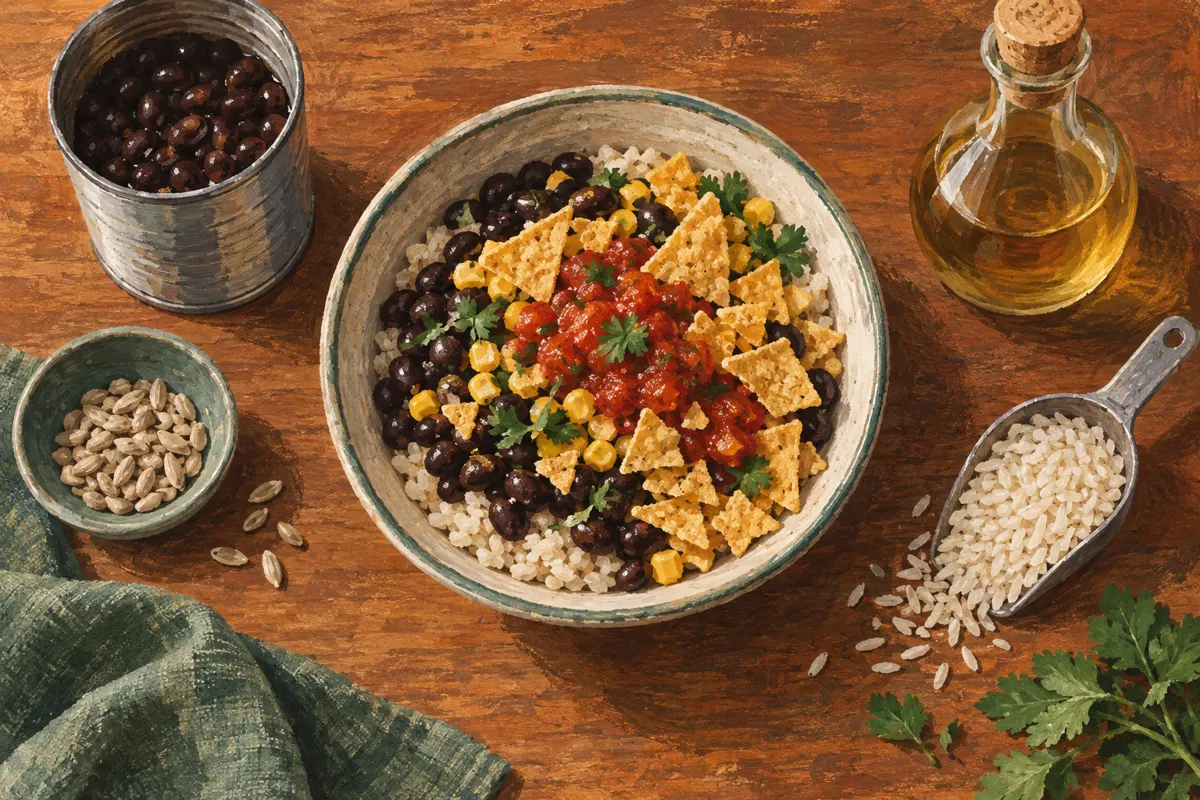
Start with cooked rice or another grain, add beans or another protein and whatever vegetables you have, then finish with a tangy sauce and something crunchy. Fresh greens are optional: frozen broccoli, canned corn, pickles, seeds, and the last spoonful of salsa can all help turn pantry staples into dinner.
Choose ingredients by their job
Check the pantry, freezer, and refrigerator before choosing a recipe. Look for five roles: a base, a protein, vegetables, sauce, and crunch. You do not need several ingredients in every category. Rice, chickpeas, cooked frozen vegetables, dressing, and sunflower seeds give you a straightforward starting point.
| Role | Use what you have | If your first choice is missing |
|---|---|---|
| Base | Rice, quinoa, barley, farro, or bulgur | Couscous also works as a base, although it is pasta. |
| Protein | Canned beans, cooked lentils, canned tuna or salmon | Use eggs, tofu, or cooked meat from the refrigerator. |
| Vegetables | Frozen broccoli, peas, carrots, or canned corn | Add jarred roasted peppers or pickled vegetables; use pickles as an accent. |
| Sauce | Vinaigrette, salsa, pesto, or hummus | Build a dressing from oil or a creamy pantry ingredient plus vinegar. |
| Crunch | Nuts, pumpkin seeds, sunflower seeds, or sesame seeds | Use a few tortilla chips, including crumbs from the bag. |
As a proposed starting portion, try about ½ cup cooked grain, ½ to ¾ cup beans or another protein, and around 1 cup vegetables. Adjust to your appetite and what is available. These are assembly suggestions, not a prescribed serving size or a nutritional target.
Season the base and prepare the toppings
A flavorful sauce helps, but the grain underneath should taste good too. America's Test Kitchen recommends seasoning cooked grains and adding olive oil or a little dressing. Taste a spoonful before building the bowl. If your toppings include salty olives, pickles, or a strong bottled sauce, take those into account before adding more salt.
Cook dry grains according to their package directions; rice, barley, and quinoa do not share one cooking time or water ratio. Canned beans offer a convenient protein, while dry beans need their own preparation. Drain canned ingredients so excess liquid does not dilute the sauce.
Frozen vegetables can take the place of fresh produce. Prepare them according to package directions, or roast suitable vegetables for browned edges. Second Spring suggests roasting frozen vegetables in a single layer with oil and seasonings, while excluding peas and edamame from that particular method. Cooking time varies, so judge tenderness and browning rather than assuming everything finishes together.
Make a sauce from what you have
Choose the sauce before adding every possible topping. It gives the bowl a flavor direction. The supplied pantry guide suggests oil, tahini, peanut butter, hummus, or yogurt as a base, then lemon, lime, or vinegar for acidity. Mustard, hot sauce, spices, and a little honey or maple syrup are optional adjustments.
- Tangy vinaigrette: combine 2 tablespoons olive oil with 1 tablespoon vinegar and a little mustard, if available.
- Creamy tahini dressing: stir 1 tablespoon tahini with 1 teaspoon vinegar, then add water gradually until it drizzles.
- Peanut dressing: stir 1 tablespoon peanut butter with 1 teaspoon vinegar and enough water to loosen it; add hot sauce if you want heat.
- Ready-made finish: use salsa, pesto, bottled dressing, or a spoonful of hummus without making a separate sauce.
Make small corrections. If a creamy sauce is too thick, loosen it a little. If it tastes flat, try a small splash of acid. Add sweetener only if you want to soften a sharp edge. You can always add more sauce at the table; start with enough to lightly coat a few bites.
Assemble dinner in a practical order
- Start the component that takes longest, usually the dry grain or roasting vegetables. Follow the relevant cooking directions.
- While it cooks, drain canned beans and vegetables, prepare any refrigerated toppings, and mix the sauce.
- Taste and season the cooked base, then divide it between bowls.
- Add the protein and vegetables. Group them separately or mix them through the grain, whichever you prefer.
- Add sauce and finish with nuts, seeds, or chips just before eating.
- Rice, black beans, corn, salsa, and tortilla-chip crumbs. Add pickled jalapeños if you have them.
- Bulgur or couscous, chickpeas, jarred roasted peppers, olives, and tahini dressing. Finish with sunflower seeds.
- Rice or quinoa, cooked edamame, broccoli, and peanut dressing. Finish with chopped peanuts or sesame seeds.
Substitute by role: white beans can fill the protein spot when chickpeas run out, and seeds can supply crunch when nuts are missing. If you have several strong toppings, add them gradually. A bowl does not need every open jar to taste complete.
Keep leftovers useful and toppings crisp
Preparing components ahead makes another bowl easier. Store the grain, vegetables, sauce, and crunchy toppings separately where practical. Add dressing and garnishes when serving so chips, seeds, and fresh vegetables retain their texture.
Do not leave cooked grains sitting at room temperature. The Illinois guide advises dividing the portion you will save into smaller, shallow containers and refrigerating it promptly, then covering once cooled. It recommends using refrigerated cooked grains within three days or freezing them for up to four months. Those limits apply to the grains; other ingredients may need to be used sooner.
For the next meal, change the sauce or one topping rather than rebuilding the entire ingredient list. The same rice and beans can take a different direction with salsa and chips or a tangy dressing and seeds.