How to organize a picnic kit for a day trip
· Editorial team seattlenewsdaily7.com
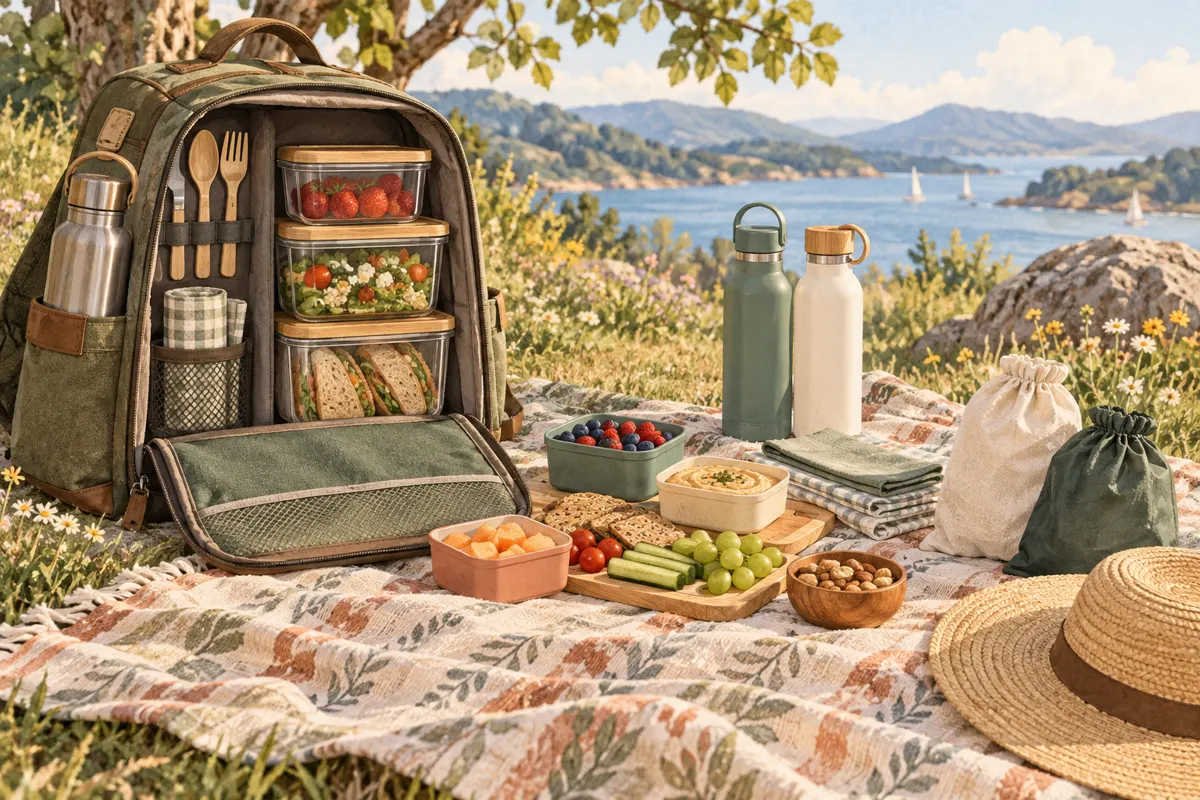
Organize your picnic kit by keeping reusable eating supplies together, packing food in secure containers, and putting cleanup supplies where you can reach them quickly. Use a checklist for the permanent kit, then add food, drinks and cooling supplies before each day trip. A practical bag and ordinary household utensils are enough to get started.
Build a reusable kit around your meal
Start with what you plan to eat and how many people are coming. Sandwiches need less serving equipment than a shared salad, while drinks from a large bottle require cups. Check each dish against its container, serving tool and eating utensil so you do not carry extras or discover a missing spoon at lunchtime.
Proposed reusable checklist: keep the following list with your picnic bag and adjust quantities for your group. Leave clean, dry supplies packed between outings if you have room.
- Eating supplies: reusable plates or bowls, forks and spoons as the menu requires.
- Serving supplies: a serving spoon or tongs for shared dishes.
- Drinking supplies: individual water bottles, or a larger bottle and cups.
- Napkins: cloth or paper napkins, with a few spare.
- Containers: secure food containers and a small container for dressing.
- Seating: a blanket, large cloth or towels.
- Cleanup: a rubbish bag and a separate bag for used dishes.
Give small supplies a consistent place
A picnic basket is optional. Choose a bag you can comfortably carry from your transport to the eating spot. A backpack can hold supplies, while an insulated bag or cooler with ice packs is appropriate for food that needs to stay cold.
Proposed organization: use three small pouches or bags—one for utensils and serving tools, one for napkins, and one for cleanup supplies. Keep cups together beside them. Giving each group a consistent place makes it easier to retrieve a single item without unpacking the whole meal.
Place the blanket near the opening because you will usually want it before the food. Keep napkins and the rubbish bag accessible too. If several people share the carrying, assign one bag to food and another to eating supplies, and make sure everyone knows which is which.
Pack food to prevent leaks and crushing
Use leakproof containers for dressings, juicy fruit and other wet foods. Check that lids close securely before loading the bag. Pack dressing separately when you want to add it at the picnic, and choose containers that can also serve as eating or serving bowls to reduce loose equipment.
- Load sturdy, heavier containers at the bottom, keeping them upright.
- Arrange lighter food above them, with sandwiches, soft fruit and delicate treats near the top.
- Protect berries in a rigid container rather than leaving them loose in the bag.
- Pack food that needs cooling in an insulated bag or cooler with ice packs.
- Keep eating supplies reachable without moving every food container.
Before closing the bag, check whether a bottle or heavy container can shift onto something delicate. Rearrange the load if necessary. If the bag is crowded, move dry supplies into a second carrier instead of squeezing sandwiches into the remaining space.
Run a short check before leaving
Keep permanent kit items separate on your checklist from things added for each trip. This makes it easier to notice a missing drink or serving utensil even when the bag itself is already packed.
- Count the people, then check eating utensils, cups and napkins.
- Confirm that every shared dish has a serving tool.
- Add food, water and any cooling supplies required.
- Check container lids and bottle caps.
- Confirm that the blanket and cleanup bags are packed.
- Lift the bag and check that it is manageable for the planned walk.
Make cleanup part of the kit
Bring a bag for rubbish so you can carry out what you brought in. Empty food containers can also hold small scraps or wrappers for the return journey. Keep used utensils and dishes separate from clean napkins and unused supplies.
At home, empty the bags, wash reusable items and let them dry before repacking. Replace used napkins and cleanup bags straight away. Update the checklist if something was missing or unnecessary; the next outing then starts with a kit that reflects how you actually picnic.